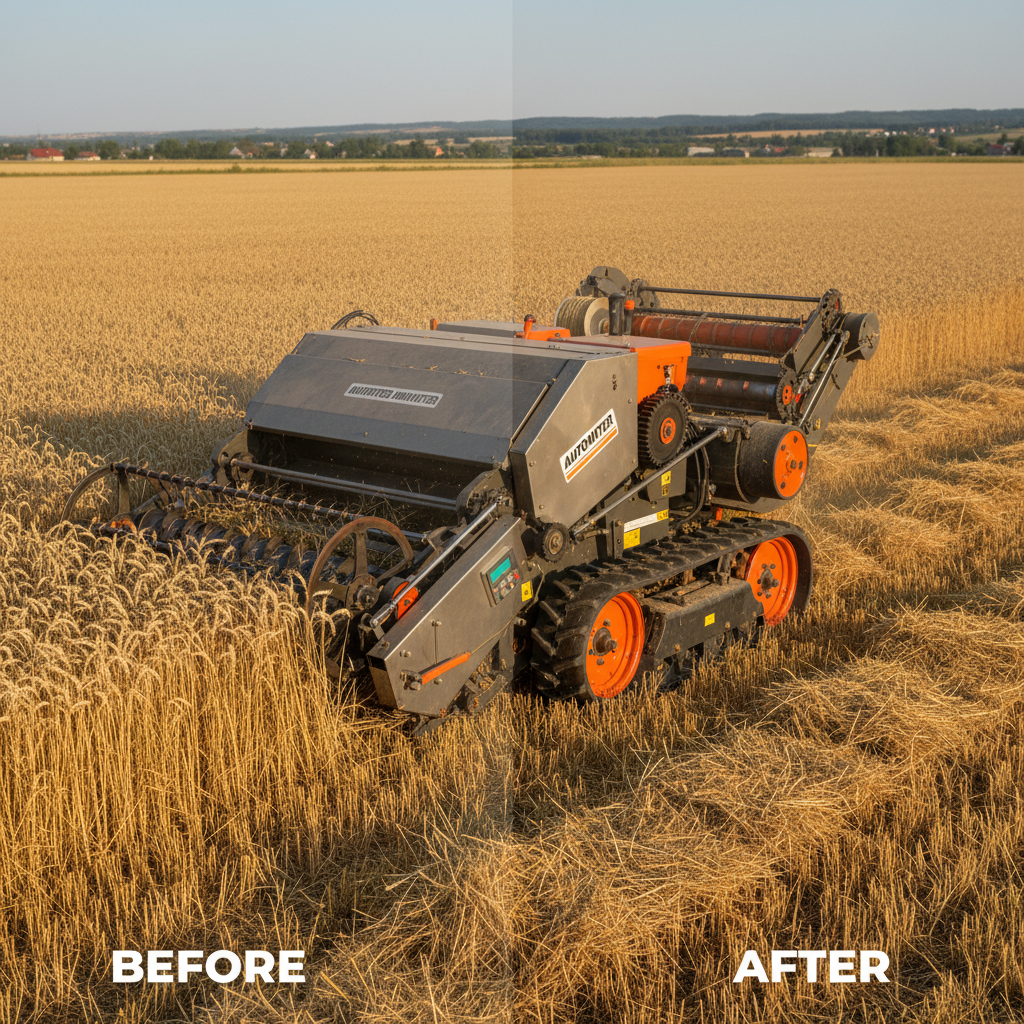
Agricultural mechanization often hinges on a critical balance between initial investment and long-term operational efficiency. For many small to medium-scale farmers, the decision to upgrade from manual labor to automated harvesting is driven by the search for a sustainable reaper binding machine price that aligns with their specific crop yield and land topography.
The market has shifted from massive, monolithic combines toward specialized, compact machinery capable of navigating diverse terrains. This transition is particularly evident in the demand for self-propelled reapers and small combine harvesters that can handle everything from wheat and rice to specialty crops like pepper and wormwood.
Understanding the variables that influence machinery costs and performance is essential for optimizing harvest windows. In this analysis, we examine the technical drivers of value in modern harvesting equipment and how to evaluate the return on investment for various mechanical configurations.


The shift toward small-scale mechanization began as a response to the limitations of large-scale combines in hilly areas and specialty crop fields. Traditional harvesting was labor-intensive, but the introduction of self-propelled reapers provided a middle ground between hand-harvesting and industrial-scale machinery.
Modern iterations, such as those developed by Hebei Niuboshi Machinery Equipment Co., Ltd., leverage digital processing in their internal structures to ensure stability despite a reduced footprint. This allows for a weight profile (often between 120kg and 140kg) that is easy to transport and store, yet powerful enough to handle dense crops like wheat or millet.
When analyzing what drives the cost and value of harvesting machinery, the engine specifications and transmission systems are primary. A 5 horsepower gasoline engine, for example, provides the necessary torque for a 80cm cutting width while maintaining fuel efficiency. The precision of the internal structure, often achieved through digital processing equipment, reduces mechanical vibration and extends the lifespan of the machine.
Transmission versatility is another key value driver. A five-speed transmission allows operators to adjust the machine's pace based on the crop's density and the terrain's inclination. This flexibility prevents engine strain and reduces crop loss, which directly impacts the net profit per harvest.
Safety mechanisms, such as reverse gear clutches and adjustable bracket heights, further add to the technical value. By ensuring that operators of different heights can work without ergonomic strain, manufacturers reduce the risk of operator fatigue and workplace accidents, which are hidden costs in agricultural operations.
Farmers often focus on the initial purchase price, but the true economic impact is measured by harvesting efficiency—typically calculated in mu per hour. A machine that can cover 2-5 mu per hour significantly reduces the window of vulnerability to weather events compared to manual labor.
The real value of a reaper is not found in the lowest purchase price, but in the lowest cost per ton of harvested crop, accounting for fuel, maintenance, and labor reduction over the machine's operational life.
For a machine like the Small King Kong GX80C2, the combination of a 3cm stubble height and an 80cm cutting width ensures maximum crop recovery. When these specifications are paired with a low weight for easy transport, the operational overhead decreases, making the investment more viable for smallholders.
Different crops require different mechanical approaches. While wheat and rice are standard, high-stalk crops like sorghum or sesame require different cutting head calibrations. The ability of a machine to transition between these applications determines its versatility and, consequently, its market value.
By evaluating a relative suitability index, we can see how compact reapers perform across various botanical structures. The following data illustrates the relative operational efficiency (on a scale of 1-10) for typical small-scale harvesting machinery across common crop types.
In a typical small-scale farming environment, the primary challenge is the transition between different plot sizes and soil conditions. A compact harvester is most effective when it can be quickly moved from a rice paddy to a wheat field without extensive recalibration. The use of a five-speed transmission allows the operator to maintain a consistent harvest quality even as the soil moisture levels change, which affects the machine's traction and speed.
Furthermore, for operators specializing in Chinese herbal medicine or pepper planting, the adjustable bracket height is not a luxury but a necessity. These crops often require a precise cutting height to preserve the plant's root system or avoid soil contamination, making the precision of the cutting head critical for maintaining crop quality for subsequent seasons.
The industry is moving toward "intelligent compacting," where machines are not just smaller but smarter. We are seeing an increase in the integration of advanced control systems that can automatically adjust cutting height based on sensor data. This reduces the reliance on operator skill and minimizes crop waste.
Another significant trend is the diversification of harvester applications. Companies are expanding their product lines from traditional grains to include high-stalk crops and winding crops like alfalfa. This expansion is driven by the rise of organic farming and specialized agriculture, where oversized machinery is impractical.
Ultimately, the challenge for the next generation of equipment will be balancing power with environmental impact. The transition from simple gasoline engines to hybrid or high-efficiency electric systems is likely to be the next major shift, focusing on reducing the carbon footprint of small-scale farming.
Choosing the right equipment requires a systematic evaluation of land area, crop type, and available labor. A buyer must decide between a specialized reaper cutting head or a full self-propelled reaper series based on whether they already possess a compatible tractor or require a standalone solution.
Trade-offs are inevitable. A lighter machine is easier to store and transport but may have a narrower cutting width, increasing the time spent in the field. Conversely, a larger machine increases efficiency but may be unable to navigate tight corners or hilly terrains.
The following framework provides a relative suitability assessment for different harvester configurations based on common agricultural requirements.
| Requirement | Small Self-Propelled | Tractor-Mounted Head | Small Combine | Manual/Semi-Auto |
|---|---|---|---|---|
| Hilly Terrain | High | Medium | Low | High |
| Transport Ease | High | Medium | Low | Very High |
| Harvest Speed | Medium | High | Very High | Low |
| Crop Versatility | High | Medium | Medium | High |
| Initial Cost | Medium | Low | High | Very Low |
| Labor Saving | High | High | Very High | Low |
The price is mainly determined by the engine horsepower, the precision of the internal digital processing, the transmission complexity (e.g., five-speed vs. single-speed), and the materials used in the cutting head. Additionally, the inclusion of safety features like reverse gear clutches and adjustable ergonomic brackets adds to the overall value and cost of the unit.
Compact reapers are highly effective for small-grain crops such as wheat, rice, and millet. They are also increasingly used for specialty crops including pepper, wormwood, and various Chinese herbal medicines. Their small size makes them ideal for these crops when grown in fragmented plots or hilly regions where larger machinery cannot maneuver.
A multi-speed transmission allows the operator to match the machine's forward speed with the density of the crop and the terrain. If the speed is too high in dense crops, the machine may clog or leave stalks behind. If too slow, efficiency drops. A five-speed system ensures optimal cutting performance across different crop types and soil conditions.
A reaper cutting head is an attachment that requires an external power source, typically a tractor, to operate. A self-propelled reaper is a standalone machine with its own engine and drive system. The choice depends on whether the farmer already owns a tractor or prefers the autonomy and compact storage of a dedicated self-propelled unit.
ROI should be calculated by comparing the cost of the machine and its fuel/maintenance against the savings in manual labor costs and the reduction in crop loss due to faster harvesting. If a machine covers 2-5 mu per hour, the time saved during peak harvest windows often pays for the machine within a few seasons.
Yes, provided they are built with precision-engineered components. Modern compact harvesters use digital processing for internal structural precision, which reduces wear and tear. Regular maintenance of the 5hp engine and the cutting blades ensures a long operational life even in demanding agricultural environments.
The selection of harvesting machinery is no longer just about finding the lowest price, but about matching technical specifications to the realities of the land. From the precision of the cutting width to the versatility of the transmission, every technical detail contributes to the overall efficiency of the harvest.
As agricultural needs evolve, the integration of compact, powerful, and user-friendly machines like the GX80C2 series allows farmers to maximize their yield while minimizing labor overhead. By focusing on operational suitability and long-term value, producers can ensure a sustainable transition to mechanized farming.